You already type the estimate once.
Teardown reads the file your estimating software already writes, and turns it into the job, the photo file and the invoice. Nobody types it again.
What happens to an estimate now
Your estimator writes it in your estimating software. Then somebody types the total into a spreadsheet. Then somebody types the parts into an order. Then somebody types it again onto an invoice. Every one of those is a chance to be wrong, and when a supplement comes in and nobody notices, the shop invoices the old number and eats the difference.
- A supplement arrives, the price goes up, nobody tells the office.
- Parts get ordered off a printed estimate that has since changed.
- A finished car sits for three days because nobody looked at the whiteboard.
- Month end takes a day because the numbers are in four places.
Your estimating software already writes this file.
Teardown reads all of it.
Estimates arrive on their own.
Teardown picks your estimates up straight from the software you already write them in. You keep writing them exactly the way you do now, and nothing gets typed a second time.
Once it is a job
Supplements tell you what changed.
When a revision arrives, Teardown works out that it belongs to a job it already has, applies it, and puts the difference in front of the office. Which lines were added, which were repriced, which were removed, and what that did to the total.
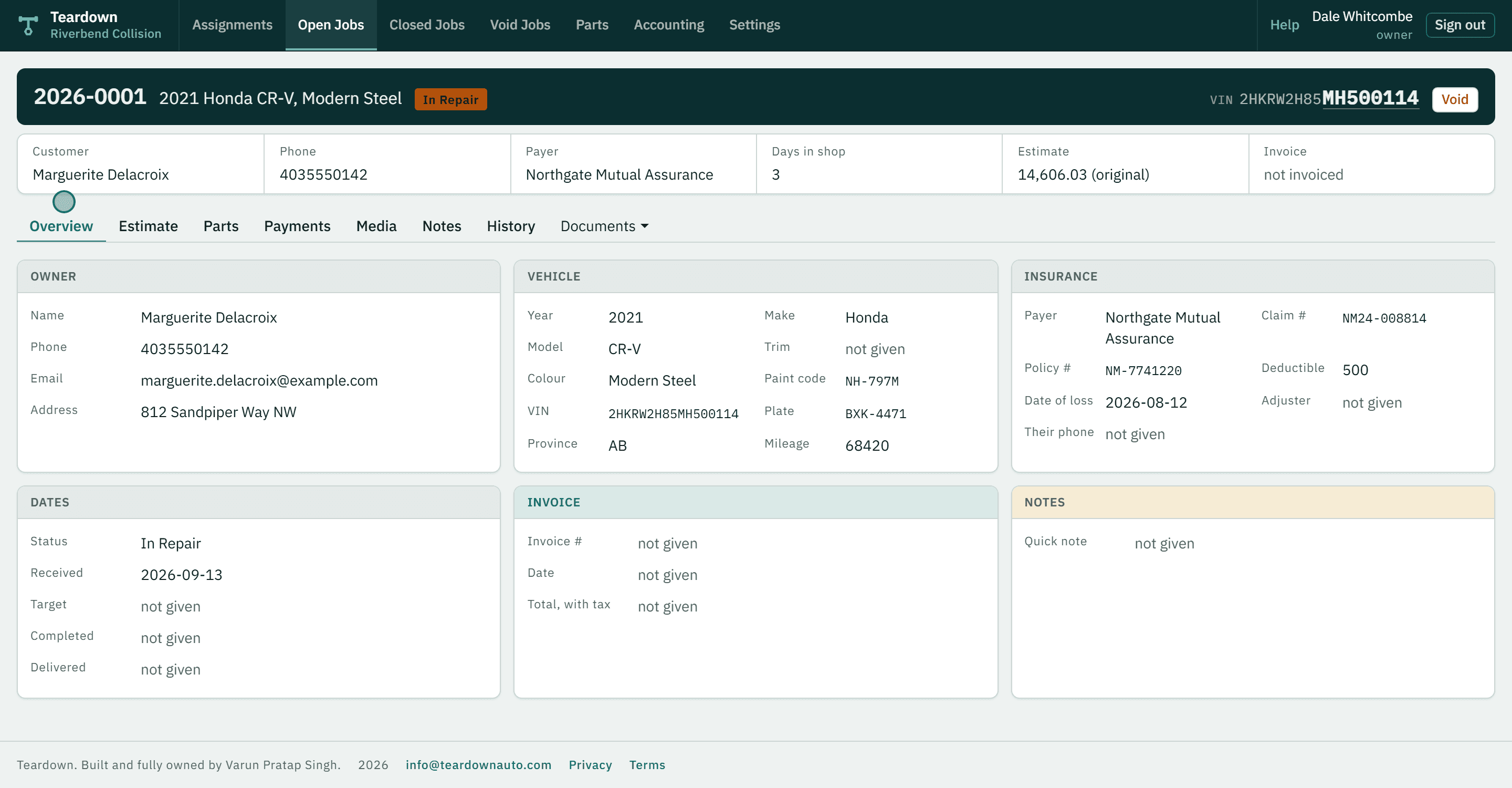
The whole car on one screen.
Who owns it, what it is, who is paying, how long it has been here, what it is worth and whether it has been invoiced. The estimate and every revision. The parts. The photos. The payments. Every change anybody has made, with their name on it.
The money
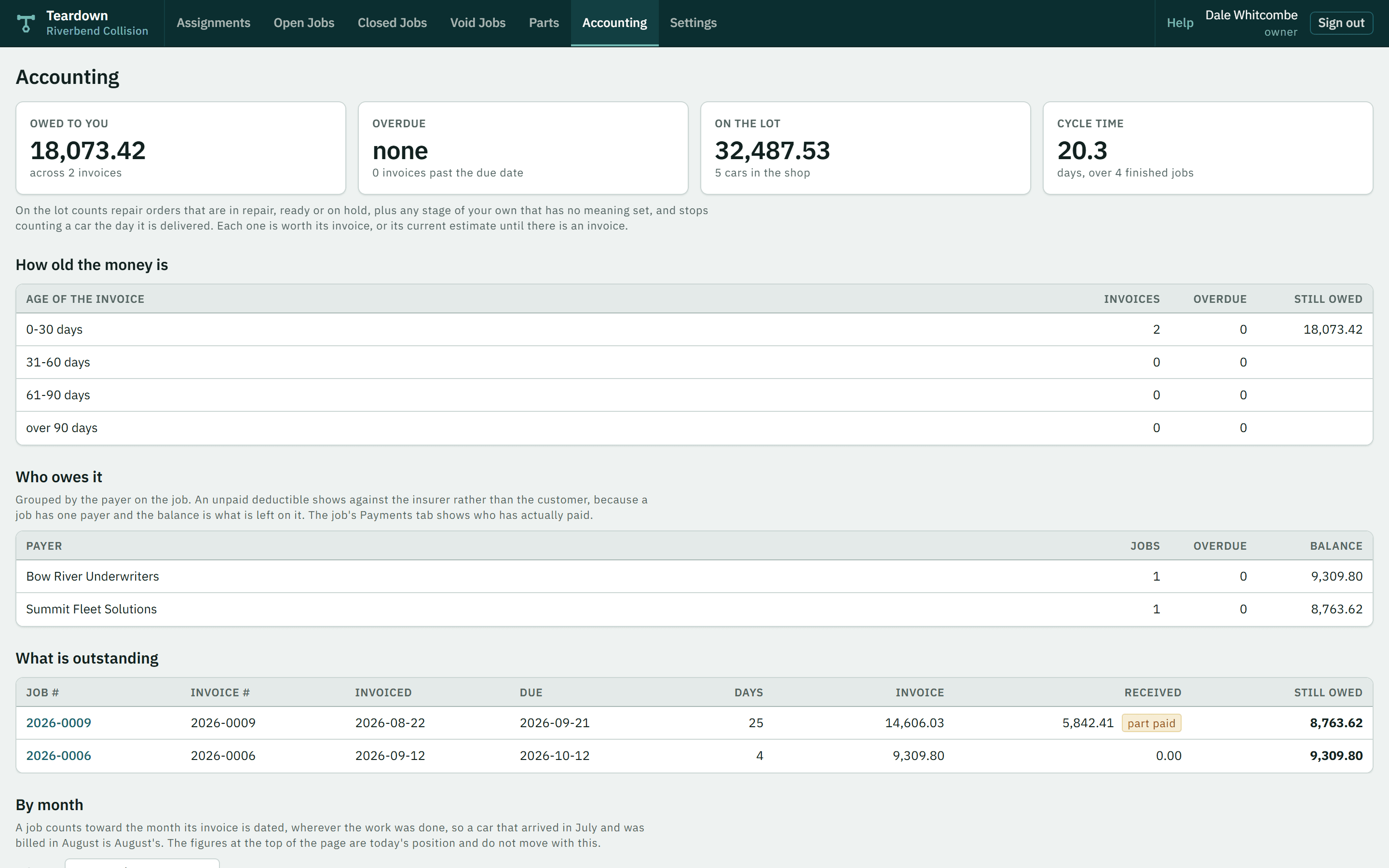
Revenue by month and by payer, what you are owed, how old it is, and what is sitting on your lot.
Launch Video
What makes it different
It was built by people who run a shop.
We work in a collision shop every day. Supplements, payers, deductibles, cars that sit too long, numbers kept in four places: we have the same problems you do, and Teardown is how we fixed them.
It is quick, and it does the whole job.
Most shop software is slow, clunky and hard to learn, and it only covers part of the work, so the rest ends up in a spreadsheet anyway. Teardown has everything you need in one place, and every screen opens fast.
Invoices go to QuickBooks in one click.
When a job is done, you confirm the invoice in Teardown and it is created in QuickBooks, laid out exactly the way your shop wants it.
See it on one of your own estimates
Set up a call and you will see it running on your own shop in about two minutes. Your cars, your customers, your jobs.
If it is not for you in the first month, you get your money back.